Accepting Payments in Africa: M-Pesa, Paystack & Flutterwave
Accept African payments with M-Pesa, Paystack, and Flutterwave: server-side verification, signed idempotent webhooks, and keeping API secret keys safe.
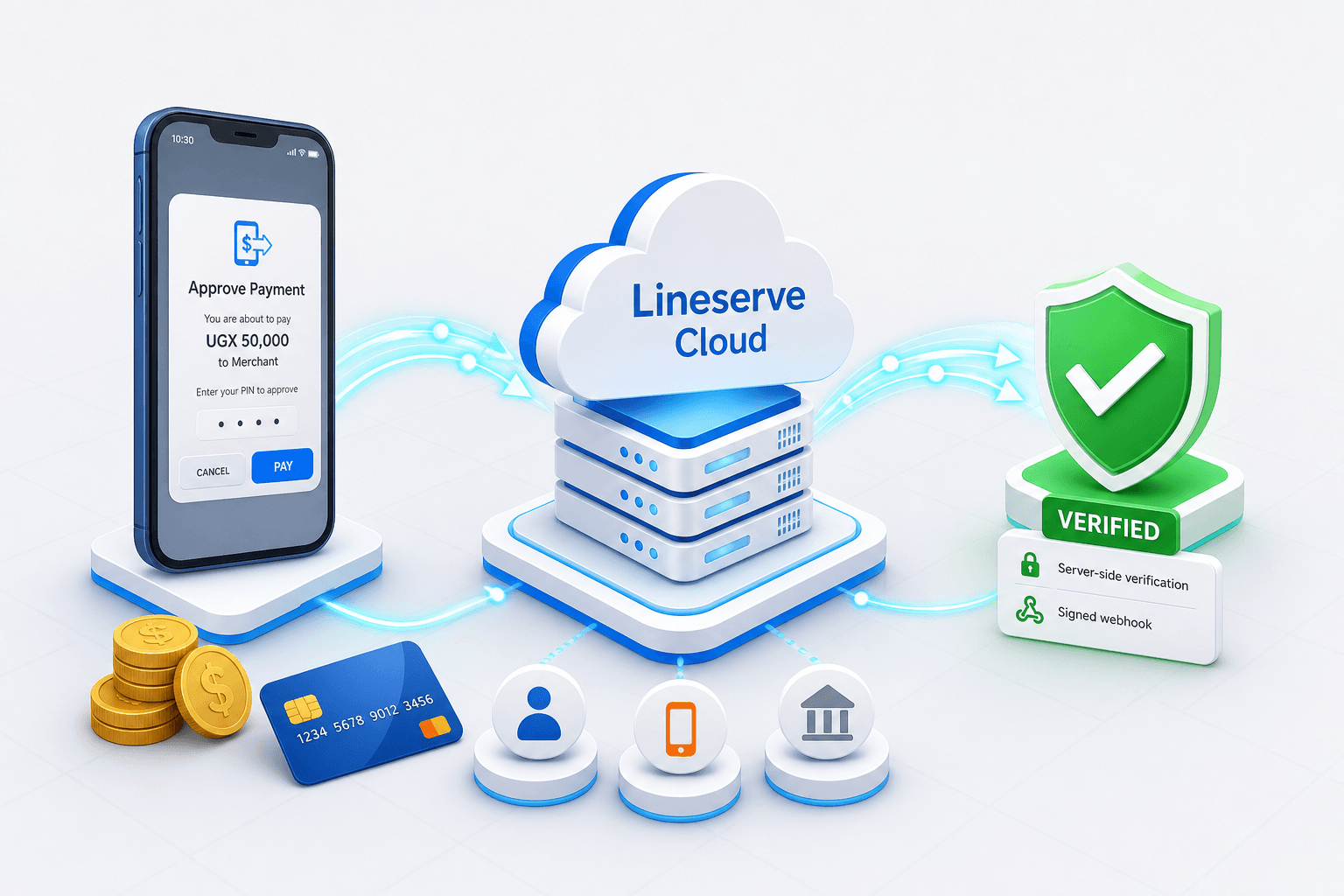
If you are building an application for African users, payments are not an afterthought — they are the product. And the payment landscape here is distinctive: mobile money is often more common than cards, and a handful of local providers dominate. This guide covers how to think about accepting payments through M-Pesa, Paystack, and Flutterwave in a cloud-hosted application.
Know your rails
- M-Pesa — dominant in Kenya and several neighbouring markets. The Daraja API supports STK Push (prompting a user to approve a payment on their phone), C2B, B2C, and transaction status queries.
- Paystack — strong across Nigeria, Ghana, and South Africa. Clean developer experience, cards plus bank transfer and mobile money.
- Flutterwave — broad multi-country coverage and a wide range of payment methods, useful when you need one integration spanning several markets.
Many teams integrate more than one provider to maximise coverage and add redundancy — if one gateway has an outage, another can take over.
The universal flow
Despite different APIs, almost every integration follows the same shape:
- Initialize a transaction from your backend with an amount, currency, and reference.
- Redirect or prompt the user to complete payment (a hosted checkout page, or an STK Push to their phone).
- Receive a webhook from the provider confirming the outcome.
- Verify the transaction server-side before granting value.
Rule one: never trust the client
The single most important security principle in payments: always verify on your server. A redirect back to a “success” page proves nothing — it can be forged. Confirm every payment by calling the provider’s verification endpoint (or validating a signed webhook) from your backend before you ship goods, unlock a feature, or credit an account.
# Pseudocode: verify before granting value
event = validate_webhook_signature(request)
if event.status == "success":
    payment = provider.verify(event.reference)  # server-to-server
    if payment.amount == expected_amount:
        grant_value(payment.customer)
Handle webhooks well
Webhooks are how you learn about payments that complete asynchronously — which, with mobile money, is most of them. Three things make webhook handling robust:
- Verify signatures so you know the request genuinely came from the provider.
- Be idempotent — providers may deliver the same event more than once, so processing it twice must not charge or credit twice.
- Respond fast — acknowledge quickly and do heavy work in a background job, or the provider may retry.
Keep secrets on the server
API secret keys belong in server-side environment variables — never in frontend code, never in a public repository. Use each provider’s public key for client-side initialization and keep the secret key strictly on your backend, where your cloud server can protect it.
Test thoroughly before going live
Every provider offers a sandbox or test mode with test credentials and phone numbers. Run your full flow — success, failure, timeout, and duplicate webhook — against the sandbox before switching to live keys. Payments are the one part of your app where a bug costs real money, so it is worth the extra care.
Get the fundamentals right — server-side verification, signed and idempotent webhooks, protected secrets — and you have a payment stack that is secure, reliable, and ready for real African customers.